- Détails
-
Catégorie : Actualités
-
Publication : mardi 8 décembre 2020 09:57
-
Écrit par Judith Raoul-Duval
-
Affichages : 9023
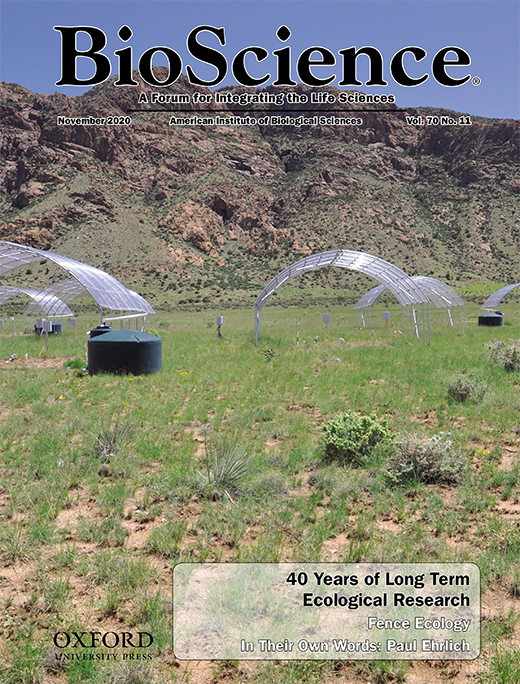
Alex McInturff, Wenjing Xu, Christine E Wilkinson, Nandintsetseg Dejid, Justin S Brashares
BioScience, Volume 70, Issue 11, November 2020, Pages 971–985, https://doi.org/10.1093/biosci/biaa103
Published: 30 September 2020
Investigations of the links between human infrastructure and ecological change have provided eye-opening insights into humanity's environmental impacts and contributed to global environmental policies. Fences are globally ubiquitous, yet they are often omitted from discussions of anthropogenic impacts. In the present article, we address this gap through a systematic literature review on the ecological effects of fences. Our overview provides five major takeaways: 1) an operational definition of fencing to structure future research, 2) an estimate of fence densities in the western United States to emphasize the challenges of accounting for fences in human-footprint mapping, 3) a framework exhibiting the ecological winners and losers that fences produce, 4) a typology of fence effects across ecological scales to guide research, and 5) a summary of research trends and biases that suggest that fence effects have been underestimated. Through highlighting past research and offering frameworks for the future, we aim with this work to formalize the nascent field of fence ecology.
Lire l'article

